

Epilogue
Time
10 weeks (2023)
Engine
Unreal Engine 5
Source control
Perforce/Github
Team
Team of 9
My role
Level design
Status
Finished
TEAM
The team consisted of 9 students – 6 designers and 3 programmers. In this level, a series of zones tell a linear story. Each zone needed to be dinstinguishable, yet make sense together as a whole. In this project, we had no artist students on our team, so the designers took on very different roles, which was fun. In my role as the team’s Level designer, I was responsible for designing the level and the four zones Denial, Anger, Bargaining and Depression. Last minute, a team member created a fifth zone for the Depression stage, and the fourth zone I did was changed into Acceptance.
THE GAME
GAMEPLAY
Epilogue is a first-person, rogue-like, shooter game – with complex player upgrades for high replayability. It is set in a dreamy abstract world between Life and Death, where the enemies gradually become harder as the Player progresses across the five zones.
INSPIRATION
Gunfire Reborn and Risk of Rain 2.
ART
Pixel art mixed with Low poly. All assets (trees, stones, individual planks etc.) were hand placed.
TARGETED AUDIENCE
Roguelike fans and Casual gamers.
The level and its paths
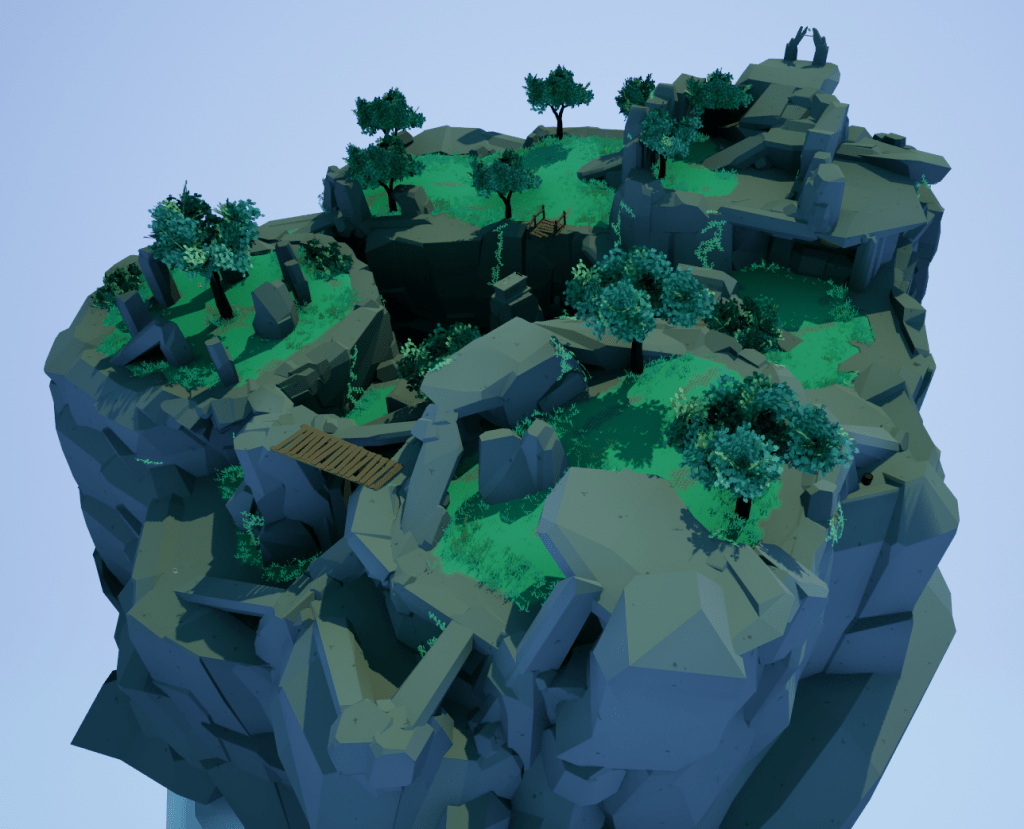
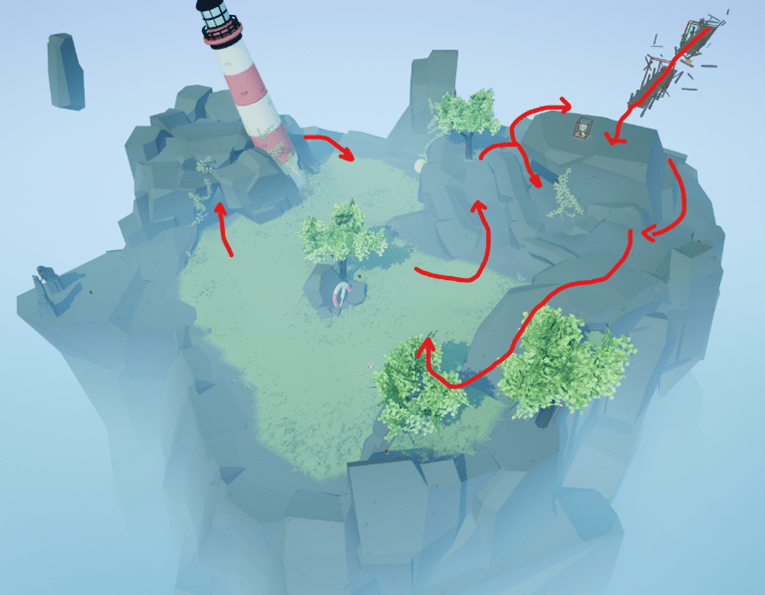
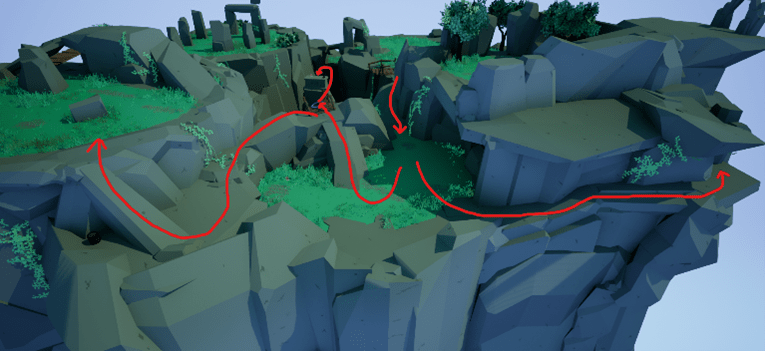
In Epilogue, a series of zones tell a linear story – the Player is moving through the five stages of grief. Working on the level, I aimed for multiple accessible paths for both Player and enemies, that would allow for smooth and exciting gameplay. I also wanted to put extra thought into designing the zones in a symbolic way, as tangible symbols of abstract concepts.
DENIAL
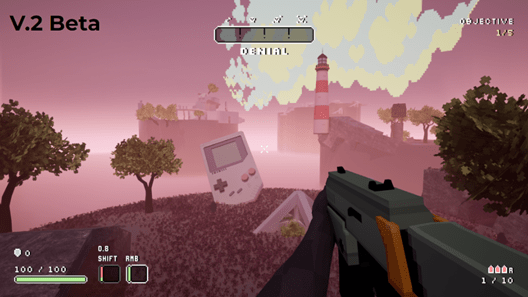
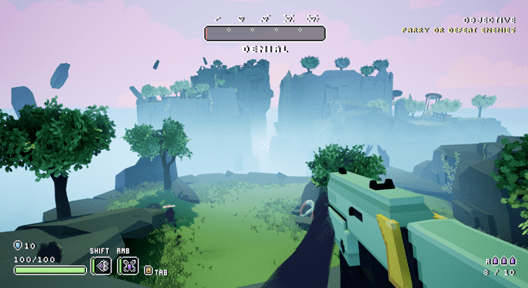
The Player is suddently faced with the first zone – Denial. The Player may want to hide from the enemy (denial), but there are few hiding spots. The paths are open and there are no one-way paths to take, to elicitate running away, which would be in line with this stage of grief. This level was designed to promote more defensive play.
ANGER
This zone allows for more offensive, heads-on, and agressive gameplay, allowing for a different type of movement than the first zone. For example, there are more jumps.

BARGAINING
Here, there are paths the Player might try, in hopes for being safe. But these are in no way sanctuaries, because the enemy will spawn there. There are paths around the zone, but its shape is like a clover. The Player might try different routes, bargaining for safety: How about here? This way then? How about this?

ACCEPTANCE
This zone was initially designed to represent the Depression stage. To finish the level, the Player would have to make a great leap straight into the pit. Falling down, the Player would aim for a thin pillar in the middle, where the portal to Acceptance would be. As in life, it is so easy to fall down, and harder to make it back up. The Player would have to find their inner strength to hold on, pick themselves up, and keep on going.
However, the zone was changed into the final Acceptance stage. There are multiple paths and a lot more verticality. The Player is now the king of the hill! Having found and accepting their place in Epilogue, the Player may be more comfortable moving around and taking leaps of faith.
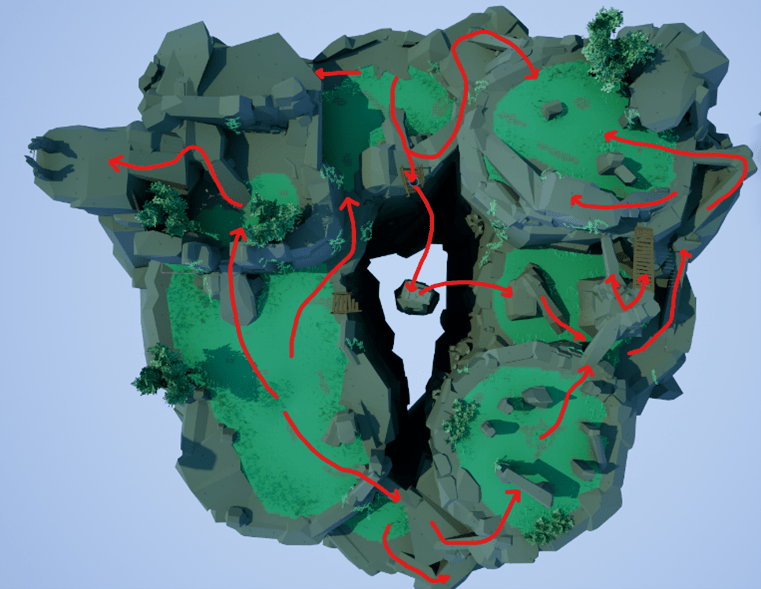

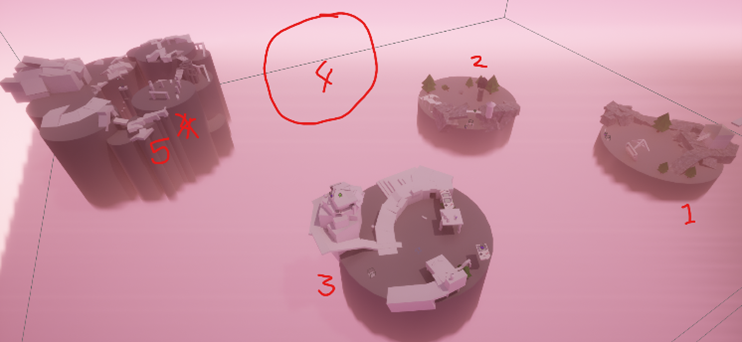
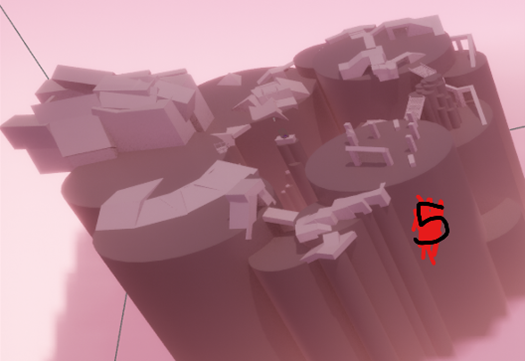
TOP-DOWN VIEW

WORKFLOW
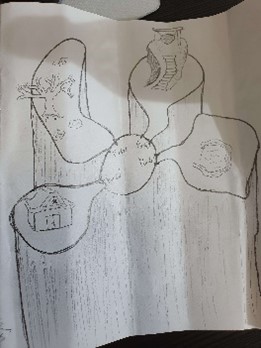
This is the first sketch I made planning the level. At first, I thought of having the pillars connected in the centre, but they were later made into separate pillars, to give better sense of progress and moving forward through the zones.
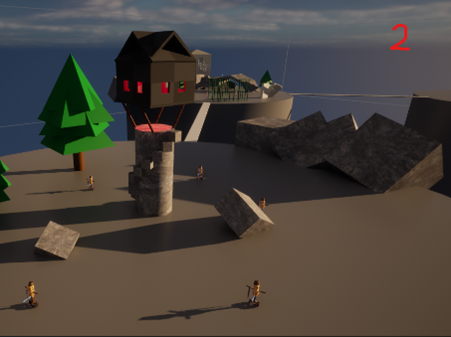
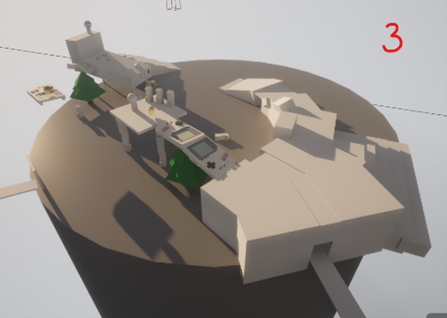
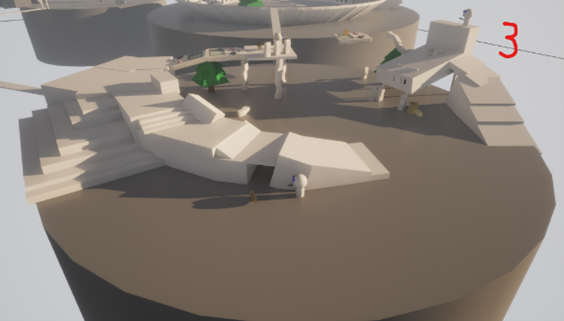
Working on the zones, I began constructing paths and regularly trying out their accessibility for both Player and enemy. My aim here was also to find the potential in whatever I placed out, to get the most out of it – such as designing bridge like structures that the Player can move both on and under. I also began to incorporate some elements/assets that were central to the theme – using them for the level design! Below, you can see the third Bargaining zone.
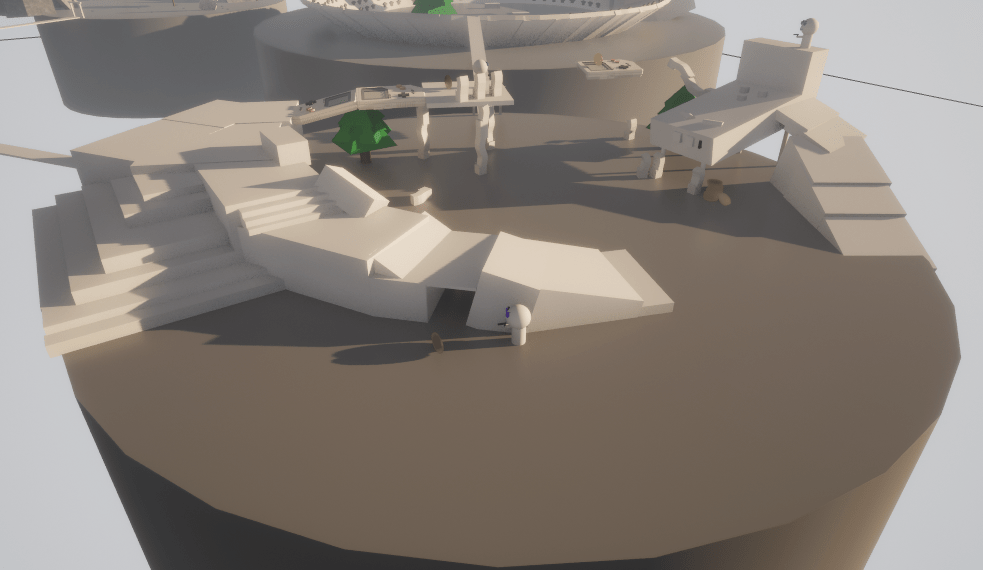
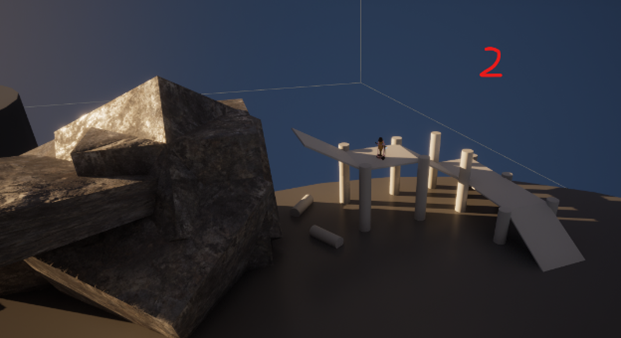
Below, you can see the fifth Acceptance zone in an early stage blockout, back when it was supposed to represent Depression. First, I constructed a base in different heights, and from there I worked on bringing out verticality and multiple options when it came to paths and hiding-rushing. I also played with the idea of the Player finishing the level by jumping to the middle, almost falling down, yet making their way up. Gotta love the triumphic endings! This would later turn out to go well with the Acceptance theme too, especially with multiple options for paths!
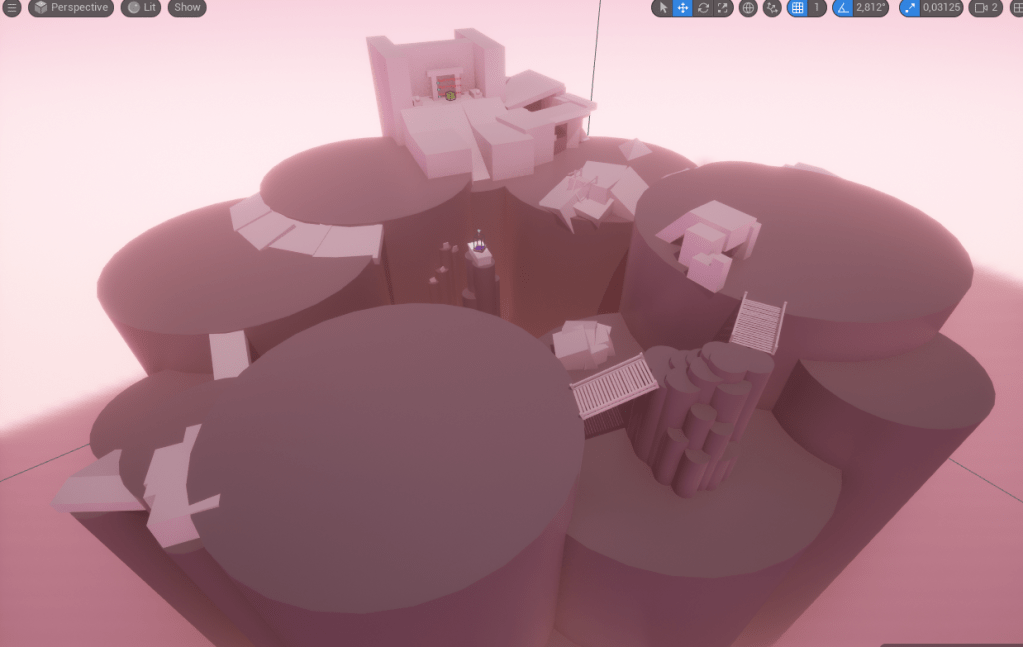
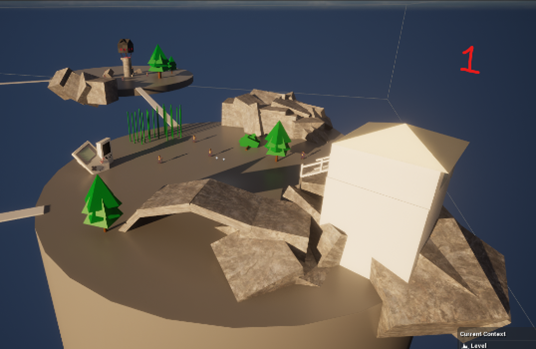
Below is the first Denial zone in the making, where I tried out some of the assets. My way of working is often to try things out, to see how it feels, trust my guts and first impressions, and go forward from there.
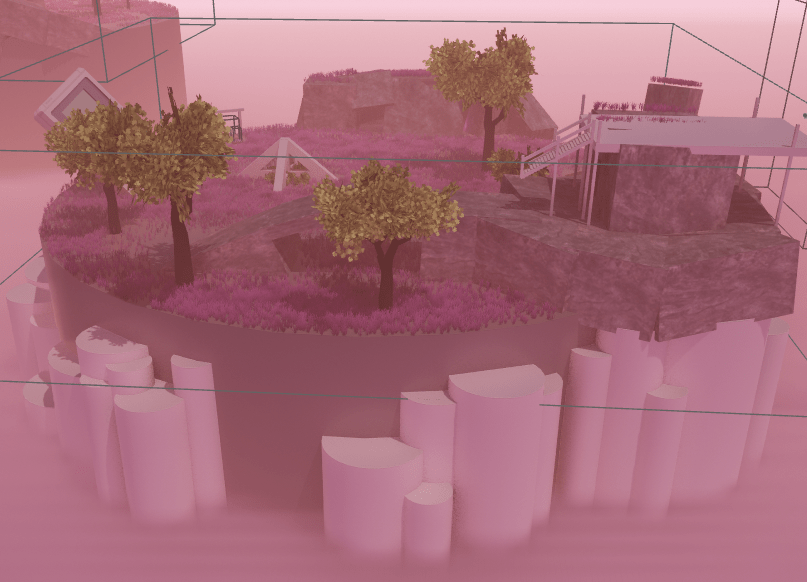
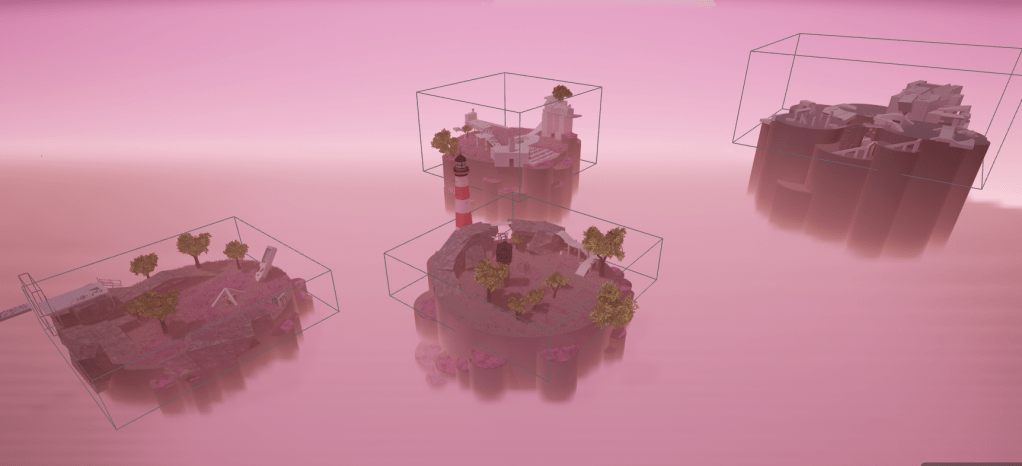
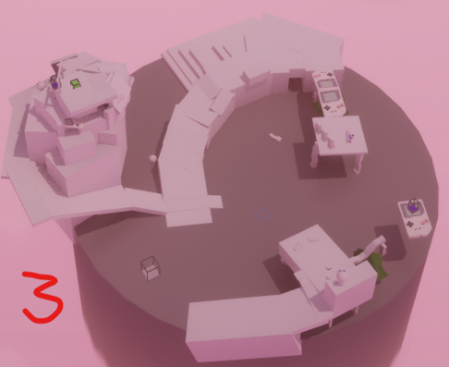
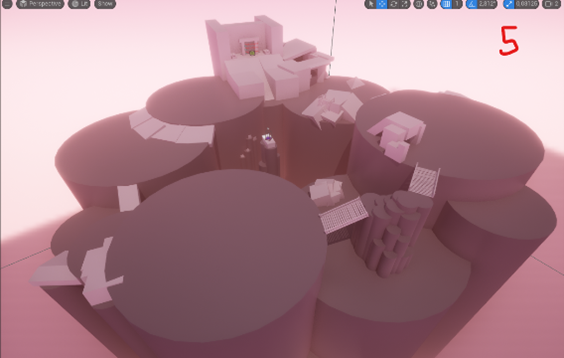
An early zoomed out view of the level. Even though the zones were supposed to have their own distinctive aesthetics, coloring and differences in promoting movement patterns, I tried to make them cohesive.
BLOCKOUTS

 Simon Winter Level Design